
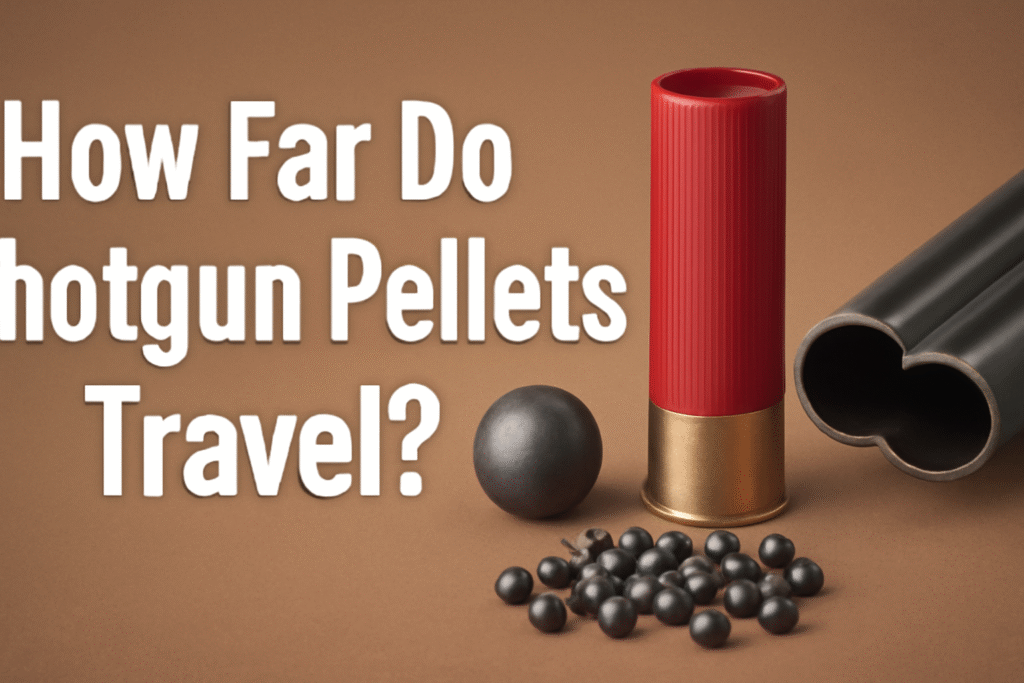
How Far Do Shotgun Pellets Travel? A Comprehensive Guide
Shotguns are versatile firearms used for hunting, sport shooting, and self-defense. They are distinct from rifles due to their design, which fires multiple projectiles — known as pellets — rather than a single bullet. Understanding how far shotgun pellets travel is crucial for safety, precision, and responsible use. This article delves into the factors that influence the distance shotgun pellets can travel, as well as important considerations when using a shotgun.
What Are Shotgun Pellets?
Shotgun pellets, also called “shot,” are small metal balls or pellets that are fired from a shotgun. The pellets are contained in a shell casing and are dispersed when the shotgun is fired. The size of the pellets can vary, with common types being birdshot, buckshot, and slugs, each designed for specific purposes. Birdshot contains small pellets and is used for shooting birds or small game, while buckshot contains larger pellets for bigger targets, and slugs are single projectiles similar to a rifle bullet.
Factors Affecting Pellet Travel Distance
Several factors influence how far shotgun pellets travel, including the following:
1. Shotgun Gauge
The gauge of a shotgun refers to the size of the barrel, and it plays a significant role in the distance the pellets can travel. Common gauges include 12-gauge, 20-gauge, and .410-bore. A 12-gauge shotgun, which is one of the most popular sizes, will typically propel pellets further than smaller gauges like the 20-gauge. This is because a larger gauge shotgun uses more gunpowder to propel the pellets, giving them greater speed and distance.
2. Pellet Size
The size of the pellets also affects how far they can travel. Larger pellets, like those used in buckshot, are heavier and will not travel as far as smaller pellets like birdshot. This is due to the difference in weight and aerodynamics. Smaller pellets are less affected by gravity and air resistance, allowing them to travel further, while larger pellets lose speed more quickly.
3. Muzzle Velocity
Muzzle velocity is the speed at which the pellets leave the shotgun’s barrel. The higher the velocity, the farther the pellets can travel. Shotgun shells vary in power, and shells designed for longer-range shots have higher muzzle velocities. Muzzle velocity is typically measured in feet per second (fps) and can vary from around 1,100 fps to over 1,400 fps depending on the shell.
4. Choke Type
The choke is a component of the shotgun barrel that controls the spread of the pellets. A tighter choke constricts the pellets, forcing them to stay together longer, which is ideal for longer-range shots. A more open choke allows the pellets to spread out more quickly, limiting the range but increasing the spread of the pellets over a wider area.
5. Barrel Length
The length of the shotgun barrel also plays a role in the distance pellets travel. Longer barrels allow more time for the pellets to accelerate, increasing their velocity and thus their range. However, the effect of barrel length is not as significant as other factors like shot size and muzzle velocity.
6. Environmental Factors
Wind, humidity, and temperature can all affect the distance shotgun pellets travel. Wind can either help or hinder the pellets’ flight, depending on the direction. Cold temperatures can cause the pellets to contract slightly, potentially reducing their velocity. Humidity can also affect air resistance, causing pellets to travel slightly shorter distances in more humid conditions.How Far Do Shotgun Pellets Travel
Maximum Distance of Shotgun Pellets

On average, shotgun pellets can travel up to 300 yards (approximately 900 feet) in ideal conditions. However, their effective range — the distance at which they can still be lethal or accurate — is much shorter.
- Birdshot: Birdshot typically has an effective range of 30 to 50 yards. Beyond this range, the spread of the pellets makes it increasingly difficult to hit a target accurately.
- Buckshot: Buckshot can maintain an effective range of 50 to 100 yards, depending on the size of the pellets. Larger buckshot pellets can still pack a punch at longer distances.
- Slugs: Unlike traditional shot, slugs are a single projectile that can travel much further, with effective ranges of up to 150 yards. Some slug designs are even capable of reaching 200 yards, though accuracy drops off significantly at longer distances.
Safety Considerations
Given the potential for shotgun pellets to travel long distances, safety is of paramount importance. When using a shotgun, always consider the following:
- Know Your Target and Beyond: Shotgun pellets can travel hundreds of yards. Always be aware of what lies beyond your target. Never fire in an area where the pellets might hit unintended targets, especially if you’re hunting in a crowded area or near structures.
- Use Proper Ammunition: Choose the right type of shell for the intended use. Using the wrong type of shot for your target can lead to ineffective shooting and safety concerns.
- Follow Local Laws: In many areas, laws regulate the discharge of firearms, including shotguns. Ensure you follow all local regulations regarding hunting and shooting distances.
Conclusion
Shotgun pellets are capable of traveling impressive distances, but several factors, including the shotgun gauge, pellet size, muzzle velocity, and environmental conditions, all influence how far they travel. While the maximum distance can reach over 300 yards, the effective range is generally much shorter, with most shotguns being most effective within 50 to 100 yards. Always prioritize safety, be aware of your surroundings, and choose the appropriate ammunition for your specific needs to ensure that you use your shotgun responsibly and effectively.

