

The Middle East, a region historically known as the crossroads of civilizations, offers a blend of ancient cultures, breathtaking landscapes, and modern-day marvels. For centuries, this part of the world has been a hub of trade, intellectual exchange, and spiritual importance. With a rich history that spans from the cradle of civilization in Mesopotamia to the Islamic golden age, the Middle East continues to captivate travelers with its diverse attractions. If you are seeking an unforgettable adventure, traveling through the Middle East offers the perfect mix of history, culture, and modern luxury. This guide will take you through the most incredible experiences you can have in the Middle East, covering must-visit destinations, key cultural highlights, practical travel tips, and much more.
Why Travel Through the Middle East?
The Middle East often gets overshadowed by more traditional travel destinations, but for the intrepid traveler, this region offers a wealth of experiences. The Middle East is where the world’s oldest civilizations began and where some of the most iconic landmarks in human history stand. From the vast deserts of Saudi Arabia to the bustling souks of Marrakech, the Middle East is as diverse as it is rich in history.
The region’s influence extends across religion, science, and trade, making it a unique destination. Many modern travelers are drawn to the Middle East to explore ancient ruins, experience rich cultures, sample exotic cuisine, and witness a fascinating blend of old-world charm and modern luxury.
The Best Countries to Visit in the Middle East
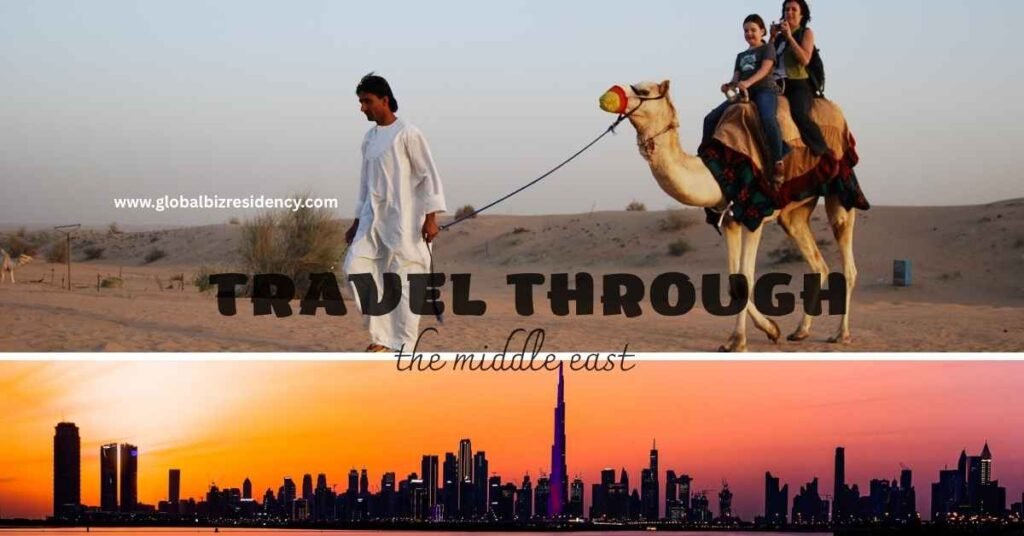
- United Arab Emirates (UAE) – A Modern Oasis Known for its ultramodern architecture, luxury shopping malls, and towering skyscrapers, the UAE is an unmissable stop on your Middle Eastern journey. Dubai, the largest city, is famous for the Burj Khalifa, the world’s tallest building, and its lavish shopping malls. However, beyond the glamour, Dubai offers cultural experiences like the Dubai Museum, the Dubai Opera, and a trip to the desert for thrilling activities such as dune bashing and camel rides. Abu Dhabi, the capital of the UAE, is home to the stunning Sheikh Zayed Grand Mosque, a masterpiece of modern Islamic architecture. The desert landscapes are equally as mesmerizing, with wide expanses of sand dunes and traditional Bedouin culture, offering an entirely different experience than the glittering cityscapes.
- Egypt – The Land of Ancient Wonders Egypt is synonymous with ancient history. For history enthusiasts, there’s no better place to immerse yourself in the past than Egypt. Cairo, the capital, is home to the Great Pyramids of Giza and the Sphinx—two of the Seven Wonders of the Ancient World. The Egyptian Museum is another highlight, housing one of the world’s most extensive collections of ancient Egyptian artifacts, including the famous tomb of King Tutankhamun. A Nile River cruise is an essential experience for anyone traveling through Egypt. These cruises offer a unique perspective of Egypt’s most important historical sites, including Luxor’s Valley of the Kings and the Temple of Karnak. For those who wish to relax after exploring these ancient treasures, Egypt’s Red Sea resorts in Sharm El Sheikh and Hurghada offer world-class beaches, diving, and luxury accommodations.
- Jordan – A Journey into the Ancient World Jordan is a country that combines remarkable ancient history with stunning natural beauty. Petra, the Rose City, is undoubtedly the country’s most famous landmark, an ancient Nabatean city carved into rose-colored cliffs. Its intricate rock-cut architecture and water conduit system are a testament to the ingenuity of ancient civilizations. But Jordan’s wonders do not end with Petra. Wadi Rum, also known as the Valley of the Moon, is a vast desert valley that offers breathtaking landscapes and thrilling adventure opportunities. You can ride camels, hike in the desert, or even camp under the stars in traditional Bedouin-style tents. The Dead Sea, with its healing mud and the ability to float effortlessly on its salty waters, is another must-visit destination.
- Israel – The Holy Land Israel is one of the world’s most historically and religiously significant countries, attracting millions of visitors each year. Jerusalem is the heart of the country and a must-visit for those interested in history and religion. The Western Wall, the Dome of the Rock, and the Church of the Holy Sepulchre are just some of the sacred sites that dot the city. For those interested in biblical history, a visit to Nazareth and the Sea of Galilee is highly recommended. Tel Aviv, on the other hand, is a vibrant city known for its modern lifestyle, nightlife, and beach culture. Along with its rich cultural heritage, Israel also offers excellent food, vibrant markets, and luxurious accommodations.
- Turkey – A Cultural Melting Pot Straddling the line between Europe and Asia, Turkey offers a unique cultural blend that spans two continents. Istanbul, the country’s largest city, is an iconic destination where East meets West. Here, you can visit historic landmarks such as the Hagia Sophia, Topkapi Palace, and the Blue Mosque. Beyond Istanbul, Turkey offers a wide range of experiences, from the ancient ruins of Ephesus to the otherworldly landscapes of Cappadocia, known for its fairy chimneys and hot air balloon rides. The beaches along the Mediterranean coast are also popular, offering clear waters and sunny weather.
- Oman – A Glimpse into Traditional Arab Culture Oman offers a more traditional Middle Eastern experience, with an emphasis on natural beauty and rich culture. Muscat, the capital, is home to stunning architecture, including the Sultan Qaboos Grand Mosque and the Royal Opera House. Oman’s natural landscapes are equally captivating, with the desert dunes of Wahiba Sands, the fjords of Musandam, and the pristine beaches of the Arabian Sea. Oman is the perfect destination for travelers seeking a quieter, more authentic Middle Eastern experience.
What to Do When Traveling Through the Middle East
1. Explore Ancient Ruins and Historical Sites
The Middle East is home to some of the world’s most significant archaeological sites. Visiting the ancient ruins of Petra in Jordan, the Great Pyramids in Egypt, or the ancient city of Persepolis in Iran is like stepping back in time. These sites offer fascinating glimpses into ancient civilizations that have shaped human history.
2. Indulge in Middle Eastern Cuisine
The Middle East is renowned for its diverse and flavorful cuisine. Whether you’re in Morocco, Lebanon, or Saudi Arabia, you’ll find a wide array of culinary delights. Don’t miss out on trying dishes like falafel, hummus, shawarma, and kebabs. Each country has its own take on traditional dishes, so be sure to sample local specialties.
For sweet lovers, the Middle East offers mouth-watering desserts like baklava, kunafa, and Turkish delight. The rich coffee culture is another aspect that every traveler should experience, especially in countries like Turkey, where drinking Turkish coffee is a centuries-old tradition.
3. Relax in the Desert
The desert is an iconic part of the Middle Eastern landscape, and a trip to this region would not be complete without experiencing it. Whether you’re visiting the vast expanses of the Sahara Desert in Egypt or the Wadi Rum in Jordan, spending a night under the stars in the desert is an unforgettable experience. Many desert tours include camel rides, traditional Bedouin camps, and desert safaris, offering a chance to explore this otherworldly terrain.
4. Shopping in Traditional Markets
The Middle East is famous for its bustling souks and markets, where you can find everything from spices and textiles to jewelry and handicrafts. Cities like Marrakech, Dubai, and Istanbul are perfect destinations for market lovers. These vibrant markets are not only great for shopping but also for experiencing the unique culture of each city.
Practical Travel Tips for the Middle East
- Dress Modestly: Many countries in the Middle East are conservative, and it is important to respect local customs by dressing modestly. In some countries, women may be required to cover their shoulders, arms, and legs. It’s also advisable for women to carry a scarf to cover their heads when visiting religious sites.
- Stay Hydrated: The Middle East can get extremely hot, especially in the summer months. Always carry water and avoid walking around during the hottest part of the day.
- Respect Local Customs: The Middle East is home to a wide range of cultures, many of which have deep religious significance. Be sure to be mindful of local customs, particularly during Ramadan, when eating and drinking in public during daylight hours may not be allowed.
- Visa Requirements: Check visa requirements well in advance, as they vary from country to country. Some Middle Eastern countries offer visas on arrival, while others may require a visa application beforehand.
- Language: Arabic is the most widely spoken language in the Middle East, but English is commonly understood in major cities and tourist areas.
ConcExploring Business Bay Dubai Uae: The Heart of Modern Business and Luxury Living
Traveling through the Middle East offers a journey that few regions can match. The blend of ancient history, diverse cultures, breathtaking landscapes, and modern luxury makes it a destination worth exploring. Whether you’re walking through the ancient ruins of Petra, relaxing by the Red Sea, or shopping in the souks of Morocco, the Middle East offers something for every traveler. With its welcoming people, rich culture, and unforgettable experiences, the Middle East is sure to leave you with memories that last a lifetime.

